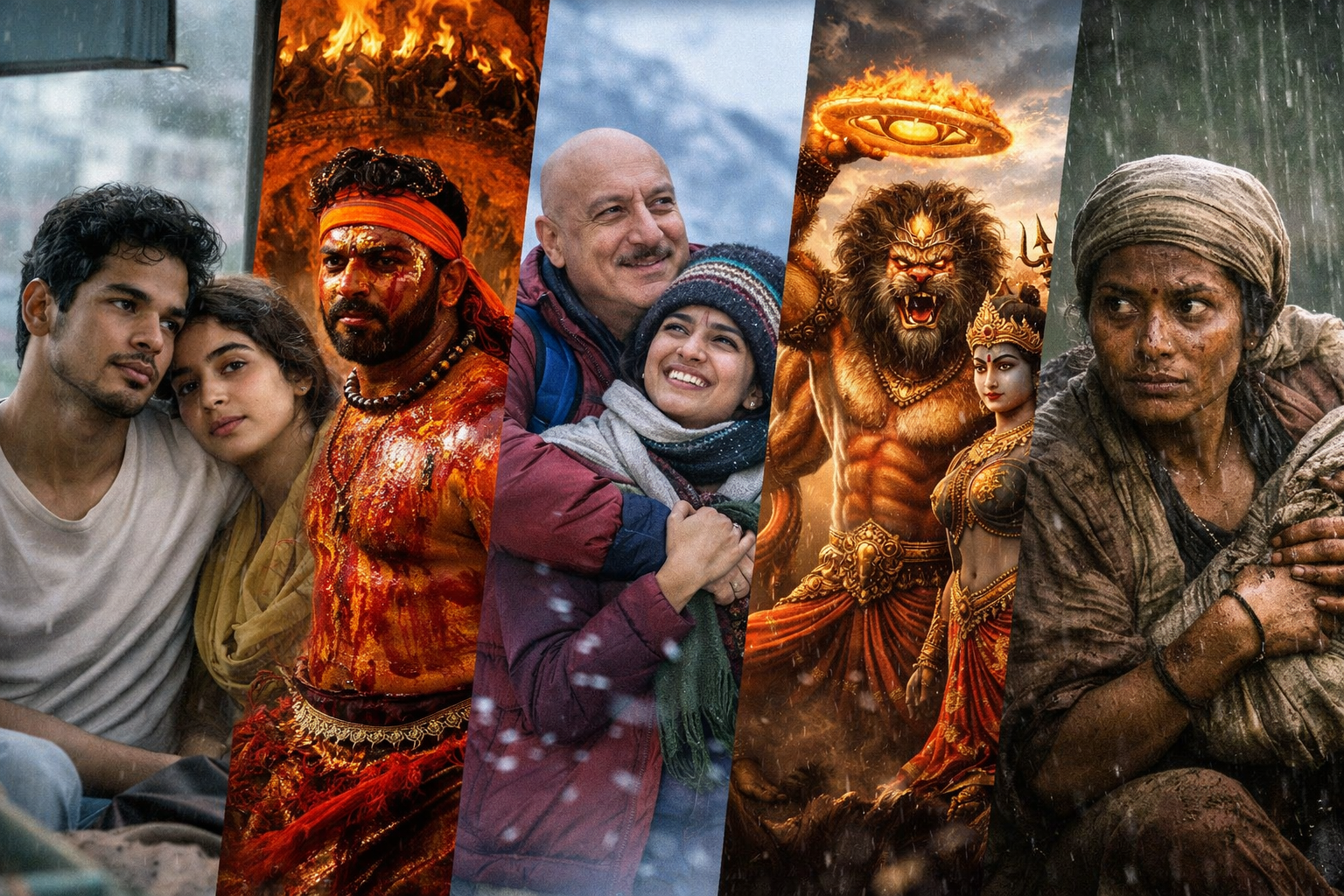
Indian cinema is staging one of its most expansive and confident appearances at the 98th Academy Awards, with films entering contention through multiple categories and eligibility routes. As of January 2026, Indian titles are not limited to the Best International Feature Film race but are also competing in Best Picture and several individual categories, reflecting a growing sophistication in global campaigning and distribution strategies.
At the center of the official Oscars effort is Neeraj Ghaywan’s Homebound, starring Ishaan Khatter and Janhvi Kapoor. Chosen as India’s official submission for Best International Feature Film, the film has already crossed a major hurdle by advancing to the Academy’s Top 15 shortlist. Its progress underscores the international appeal of socially rooted Indian narratives, a space where subtle storytelling and emotional realism are increasingly finding favor with global audiences and critics.
Beyond the official submission, a diverse group of Indian films has independently qualified for general Academy categories by meeting theatrical and screening requirements in key markets such as the United States. Rishab Shetty’s Kantara: A Legend Chapter 1 stands out as a high-profile contender, expanding the mythological universe of the original blockbuster while delving deeper into the spiritual origins of Daiva worship. The film’s scale and cultural specificity have helped it stand apart in the crowded awards landscape.
Anupam Kher’s Tanvi The Great brings a more intimate, emotionally driven story into the race. Centered on an autistic woman determined to fulfill her late father’s dream of visiting the Siachen Glacier, the film blends personal resilience with broader national symbolism. In a significant milestone for Indian animation, Mahavatar Narasimha has entered the competition as a 3D mythological epic, marking one of the country’s most ambitious animated projects to seek Academy recognition.
Regional and diasporic stories are also gaining visibility. Tourist Family, a Tamil film about a Sri Lankan Tamil family grappling with displacement in India, adds a strong humanitarian perspective. Marathi cinema makes history with Dashavatar, which has reached the Academy’s Main Open Film Category, while the UK–India co-production Sister Midnight, starring Radhika Apte, highlights the growing role of international collaborations. The Tamil survival drama Gevi has further expanded reach by being made available on the Academy Screening Room.
With mythology, social realism, animation, and regional storytelling all represented, India’s presence at the 98th Academy Awards marks a shift from singular entries to a broad-based, strategically aligned campaign—one that could result in the country’s strongest Oscars showing yet.