By Ajay Ghosh
For decades, Indian Americans have been celebrated as one of the United States’ most successful immigrant communities. Their achievements in technology, medicine, academia, entrepreneurship, and public service were often cited as evidence of the American dream in action. Yet recent political rhetoric surrounding immigration and high-skilled foreign workers has placed the community under an unusual spotlight, prompting concerns among Indian Americans who believe their contributions are being overshadowed by a changing political climate.
The controversy intensified after recent remarks attributed to U.S. Vice President J.D. Vance, who referred to certain foreign workers on H-1B visas as “foreign indentured servants.” The comments drew criticism from several Indian-American organizations and officials in India, who argued that such terminology carries historical connotations that diminish the professional stature and accomplishments of millions of highly skilled immigrants. The remarks came amid heightened scrutiny of employment-based immigration programs and restrictions affecting major technology outsourcing firms.
The Trump administration’s move to suspend a number of prominent technology companies from the US Permanent Labor Certification (PERM) program represents a consequential development in the evolving debate over skilled immigration.
The affected firms include Indian IT powerhouses Infosys, TCS, Wipro, and HCL Technologies, along with Cognizant, Capgemini, Microsoft, and Adobe. Beyond its immediate impact on workforce mobility, the decision reflects the complex interplay between immigration reform, labor market protection, and America’s long-term ambitions in the global technology sector.
Harsha Vaidya, Vice President for Studies at Observer Research Foundation, New Delhi, wrote in NDTV last week: “At one level, the move is being presented as an enforcement measure designed to protect American workers. At another, it raises a more fundamental question: can the United States continue to sustain its technological advantage while narrowing the pathways through which global talent enters and integrates into its economy?”
The debate and the new restrictive policies by the Administration raises a larger question: How did a community long viewed as a model of educational achievement, entrepreneurship, and civic engagement suddenly find itself at the center of a contentious national discussion?
A Remarkable Success Story
The modern Indian-American story began largely after the Immigration and Nationality Act of 1965 removed country-based quotas and opened the doors to skilled immigrants from Asia. Over the next six decades, engineers, doctors, scientists, researchers, and entrepreneurs from India helped fuel American economic growth and innovation.
Today, approximately 5 million Indian Americans live in the United States, making them the country's second-largest Asian-origin group. The population has grown by more than 170 percent since 2000, reflecting both continued immigration and natural population growth. Nearly two-thirds are foreign-born, maintaining close connections with both the United States and India.
What distinguishes Indian Americans statistically is their educational attainment. Nearly three-quarters hold at least a bachelor's degree, one of the highest rates among any ethnic community in the nation. Median household incomes exceeding $145,000 place Indian Americans at the top among major ethnic groups in America.
The economic impact is substantial. According to figures cited by the U.S.-India Strategic Partnership Forum, immigrants participating in employment-based immigration programs contribute trillions in household income and hundreds of billions in tax revenues. Indian Americans, while representing only 1.5 percent of the U.S. population, are estimated to contribute roughly 6 percent of U.S. GDP.
These numbers have frequently fueled the perception of Indian Americans as a "model minority." Yet that label, while highlighting success, has often masked the diversity and complexity within the community itself.
The Engine Behind America's Technology Leadership
Few communities have had a greater influence on America's technology sector than Indian Americans.
From Silicon Valley startups to multinational technology giants, Indian-origin professionals have played pivotal roles in shaping the digital economy. Indian-born entrepreneurs are estimated to have founded a significant share of Silicon Valley technology firms, while Indian professionals remain among the largest beneficiaries of the H-1B visa program.
Indian-born entrepreneurs have founded approximately 15.5 percent of Silicon Valley technology firms, underscoring their central place in America's innovation ecosystem. Furthermore, Indian professionals utilizing the legal work – Visa pathway, provide critical talent to sectors ranging from artificial intelligence and cloud computing to cybersecurity and semiconductor development.
Together, these executives oversee companies worth trillions of dollars and employing hundreds of thousands of workers worldwide.
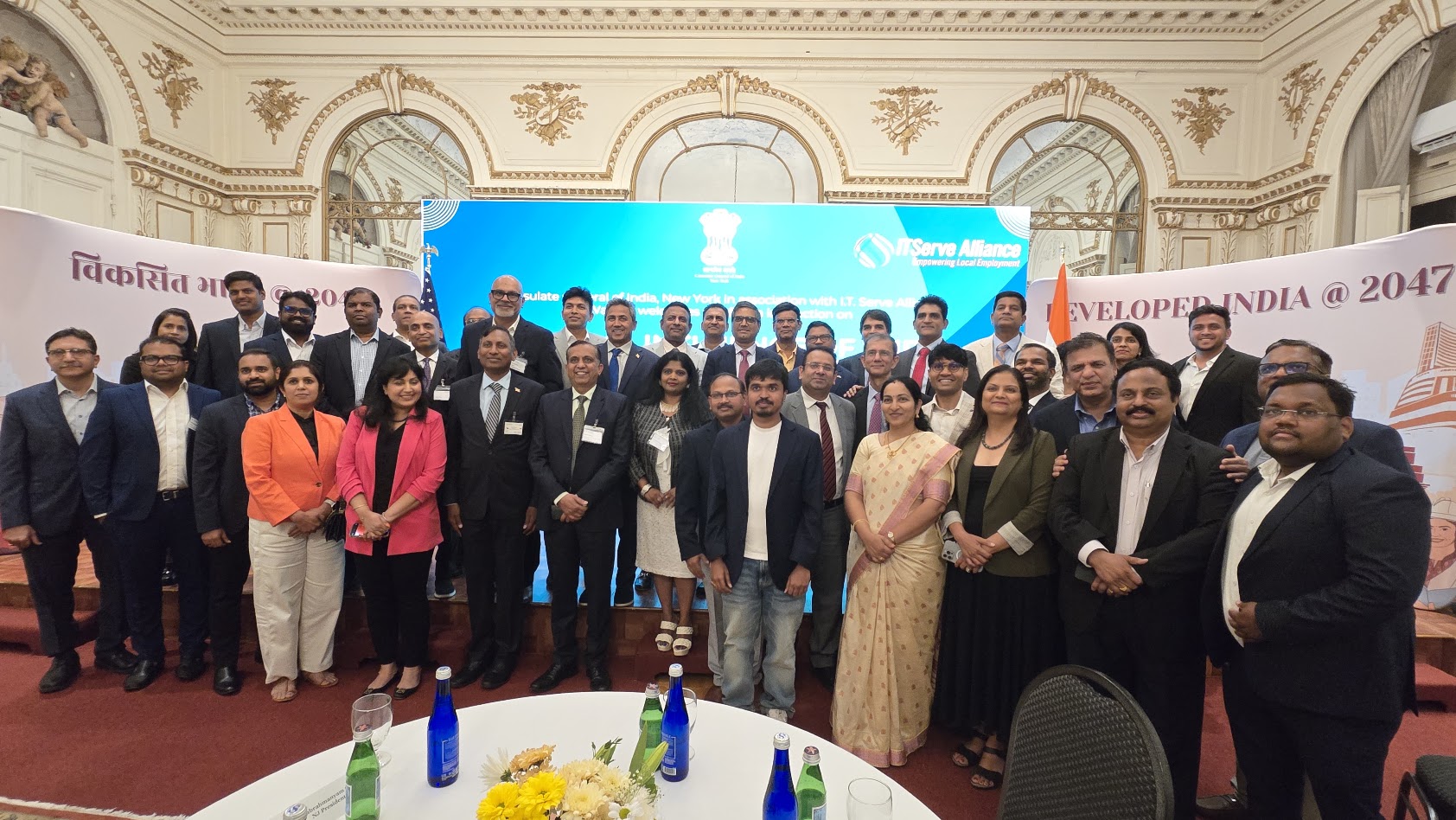
Organizations such as ITServe Alliance with a strong membership of over 3,000 IT companies in the United States that collectively support over 500,000 high-skilled American jobs and contribute more than $12 billion annually to the U.S. economy. Its member firms provide critical talent in software development, artificial intelligence, cybersecurity, cloud computing, and digital transformation, serving Fortune 500 companies and government agencies across the nation.
Beyond business, the organization has invested over $10 million in STEM education, scholarships, and community initiatives, helping strengthen America's future workforce and technological leadership. ITServe has emerged as one of the most significant networks of immigrant-founded businesses driving innovation, job creation, and economic growth in the United States.
The startup ecosystem tells a similar story. According to studies cited by industry organizations, Indian-born entrepreneurs have founded dozens of America's unicorn companies, including firms in artificial intelligence, cybersecurity, enterprise software, cloud computing, and healthcare technology.
As Satya Nadella has observed, “America's strength has always come from its ability to attract talent from around the world and empower people to innovate.” That principle has been central to the Indian-American contribution to U.S. competitiveness.
Healing America
The impact of Indian Americans extends far beyond technology.
Indian Americans have made an extraordinary impact on U.S. healthcare that extends far beyond their proportion of the population. While constituting only about 1-1.5% of Americans, physicians of Indian origin represent nearly 10% of the nation's physician workforce, with more than 120,000 doctors serving every seventh patient in communities nationwide.
Organizations such as the American Association of Physicians of Indian Origin (AAPI) have become influential institutions in healthcare advocacy and professional development.
Their contributions were particularly visible during the COVID-19 pandemic, when thousands of Indian-American healthcare professionals served on the frontlines across hospitals, clinics, and research facilities.
Through clinical care, medical research, physician education, healthcare advocacy, and service in underserved communities, AAPI members have become a vital pillar of the U.S. healthcare system, helping address physician shortages while improving patient outcomes nationwide
Healthcare experts frequently note that without immigrant physicians, especially those from India, the United States would struggle to meet its growing healthcare demands.
The Educational Pipeline
Indian Americans are equally influential in academic and research institutions.
India recently became the largest source of international students in the United States, with more than 330,000 Indian students enrolled in American colleges and universities during the 2023-24 academic year. These students contribute billions of dollars in tuition, research activity, and local economic spending.
Indian-origin professors and researchers have become leaders in fields ranging from artificial intelligence and biotechnology to public health and aerospace engineering. Their work has generated patents, launched startups, and advanced scientific discovery.
Former Google CEO Eric Schmidt once remarked, “Talent is the ultimate renewable resource.” The continued flow of Indian students and professionals has proven the economic truth behind that statement.
Entrepreneurship and Wealth Creation
Beyond engineering and medicine, Indian Americans have become a pillar of American entrepreneurship.
One of the most striking examples is the hospitality industry. Individuals of Indian origin own more than half of America's motel properties, a phenomenon often referred to as the “Patel Motel” success story. Beginning with small, family-operated businesses, generations of Indian entrepreneurs transformed the industry while creating jobs and economic opportunities in communities across the country.
Indian-owned businesses also thrive in finance, retail, consulting, transportation, manufacturing, and healthcare services. Approximately 71 percent of Indian Americans work in management, business, science, or professional occupations, a figure reflecting their strong presence in leadership roles.
The Asian American Hotel Owners Association (AAHOA) represents nearly 20,000 hoteliers who own more than 36,000 hotels, accounting for approximately 60% of all U.S. hotel properties.
AAHOA member-owned hotels contribute an estimated $371 billion to U.S. GDP, support 4.1 million jobs, generate $705 billion in business sales, and produce nearly $100 billion in annual tax revenues. Employing about 1 million workers and driving $328 billion in guest spending, AAHOA has become a powerful economic force, demonstrating the significant role of immigrant entrepreneurship, particularly Indian-American ownership, in the growth and success of the U.S. hospitality industry.
Public Service & Government
Indian Americans have emerged as a significant force in U.S. public service and government. Over the past two decades, their political representation has grown steadily, with Indian Americans serving as members of Congress, governors, ambassadors, federal judges, military officers, and senior officials across federal and state governments.
Their increasing participation reflects both rising civic engagement and desire to be part of the institutions that shape US policy and outreach. From shaping public policy and diplomacy to serving in the military and judiciary, Indian Americans continue to strengthen democratic institutions and expand their influence in American public life, demonstrating a growing commitment to leadership, public service, and community representation.
Why the Backlash?
Despite these accomplishments, recent public criticism reflects broader anxieties surrounding immigration, globalization, and labor market competition.
Concerns among some Americans center on whether H-1B visa programs suppress wages, displace domestic workers, or allow corporations to prioritize foreign labor. These arguments have gained traction during periods of economic uncertainty and political polarization.
At the same time, some observers within the Indian-American community acknowledge internal challenges.
According to Dr. Kishore Bellamkonda, a research scientist and entrepreneur, who immigrated ot the United States in 1993, “Indians were highly respected and considered as decent professionals. Not anymore.”
He describes three issues that are eliciting negative reactions on Indians. “First, lack of integration with mainstream America on the part of young arrivals, who tend to stick to each other. Poor civic sense. And cultural invasion with noisy festivals in the public. One can defend that they did not break any laws. But these traits do not make them welcome.”
His comments reflect a growing debate within the community regarding assimilation, cultural identity, and public engagement.
Beyond Stereotypes
The current debate also exposes the limitations of the “model minority” label itself.
While aggregate statistics show extraordinary success, Indian Americans are not a monolithic group. The community includes recent immigrants, second- and third-generation citizens, students, blue-collar workers, entrepreneurs, academics, and public servants. Many continue to face barriers involving immigration backlogs, workplace discrimination, and social integration.
Furthermore, the success of Indian Americans has been closely tied to America's openness to global talent. Restrictive immigration policies risk disrupting a system that has supplied the country with some of its most accomplished innovators, scientists, and professionals.
As the U.S.-India Strategic Partnership Forum recently noted, Green Card and H-1B programs remain among America's most successful economic initiatives, supporting innovation, tax revenues, and global competitiveness.
The Green Card and H-1B visa programs have generated $2.1 trillion in household income and contributed nearly $580 billion in federal, state and local taxes, according to the US-India Strategic Partnership Forum (USISPF), which has urged the Trump administration to recognize the economic benefits of legal immigration.
In a statement on Friday, October 9, the Washington-based organization described the two programs as key drivers of American innovation and economic growth, as the administration tightens scrutiny of legal immigration pathways.
“The Green Card and H-1B programs are among the United States’ most significant economic policy success stories, strengthening America’s economic growth, innovation, and global competitiveness,” USISPF said.
USISPF also cited a recent White House ceremony where President Donald Trump presented the National Medals of Science and the National Medals of Technology and Innovation to six leading innovators. Five of the six recipients were born outside the United States, it said.
“We share the administration’s goal of helping the United States succeed as a global technology leader by attracting the best global technology talent while sustaining a strong domestic job market,” USISPF said.
Citing an analysis of 2022 US Census Bureau data, the organization said immigrants covered by the programs had paid $382.9 billion in federal taxes and $196.3 billion in state and local taxes. Their combined spending power stood at $1.6 trillion.
The statement came amid recent action by the US Department of Labor concerning the Permanent Labor Certification (PERM) program, an important pathway to employment-based permanent residency.
The Road Ahead
The story of Indian Americans is ultimately a story about the evolving nature of the American experiment itself. A community that represents a little over one percent of the population has helped shape some of the nation's most important institutions, from Silicon Valley boardrooms to hospital operating rooms, university laboratories, and government offices.
Yet success does not make any community immune from political scrutiny or social tension.
The challenge for policymakers is to balance legitimate concerns about immigration policy with recognition of the measurable economic and societal benefits delivered by highly skilled immigrants. The challenge for Indian Americans is to continue strengthening civic engagement, community integration, and public understanding of their contributions.
“When a community is touted as a model, it's easy to overlook the fact that increased visibility can lead to heightened vulnerability,” says Ankur Vaidya, Chairman of Federation of Indian Americans (FIA) in New York, New Jersy and Connecticut.
Vaidya points to the expulsion of Uganda's Asian population, primarily of Indian descent, in 1972, which he says serves as a stark reminder of this phenomenon. “By portraying a thriving and productive minority as outsiders, the nation ultimately suffered the consequences: its economy faltered, institutions weakened, and recovery took decades.” Vaidya, veteran Indian American community leader pointed out.
“Indian Americans, like all American communities, deserve to be judged as individuals under the law, rather than being singled out for scrutiny based on their success, origin, or political convenience. History has shown that the societies that treat their contributors as suspects ultimately harm themselves,” Vaidya says.
As the United States confronts the challenges of the 21st century, from artificial intelligence and healthcare delivery to scientific discovery and global competition, Indian Americans will remain among the nation's most valuable contributors and partners in progress.
"The Indian American story is, in many ways, the American story itself: a belief that knowledge, hard work, and opportunity can create lasting prosperity for future generations."
As debates over immigration, workforce policy, and national identity continue, the Indian-American experience offers a powerful reminder that America's economic strength has often depended on its ability to attract, nurture, and retain talent from around the world.
Far from being merely beneficiaries of the American dream, Indian Americans have become among its most consequential builders.