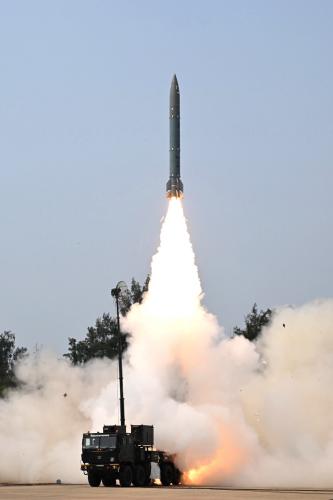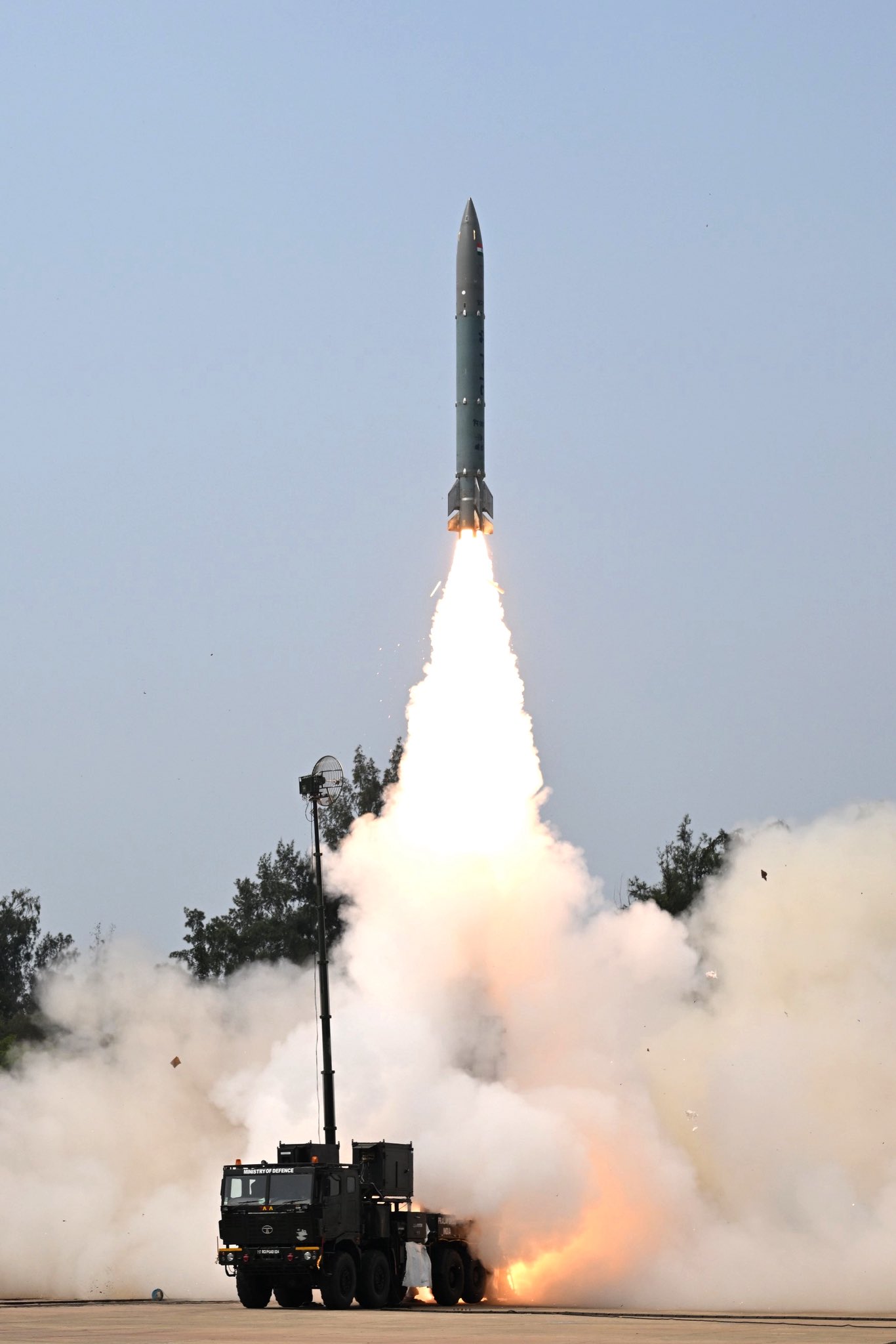
New Delhi, Nov 5 (IANS) The Defence Research and Development Organisation (DRDO) has successfully conducted the flight test of the indigenously developed, surface-to-surface 'Pralay' Missile, marking another achievement in India's defence capabilities.
The announcement was made by Defence Minister Rajnath Singh on Thursday.
"DRDO successfully conducted the flight test of the indigenously developed Pralay Missile off the coast of Odisha today at 1110 hrs," he posted on X.
"The test was conducted as part of user evaluation trials and successfully met all the stipulated objectives, as validated by data captured through various range instruments," he added.
The Defence Minister further said that this successful trial marks another significant milestone in strengthening India’s indigenous defence capabilities.
Last month, the DRDO announced that it has successfully conducted the flight trial of its indigenously developed High-Altitude Platform System (HAPS), achieving an altitude of 21 km and demonstrating long-endurance stratospheric flight capabilities.
According to the Ministry of Defence, the experimental flight reached an altitude of 21 km above mean sea level and remained at around 20 km altitude for more than 30 minutes before being commanded to descend. The platform was subsequently recovered safely, and data collected during the mission was analysed to assess its performance.
"The experimental flight attained an altitude of 21 km above mean sea level (AMSL) and remained at an altitude of 20 km AMSL for more than 30 minutes, before it was commanded to descend back to ground. The system was successfully recovered and flight performance data was analysed," the Ministry said.
The trial demonstrated the platform's ability to operate in the stratosphere, a region that offers advantages for persistent surveillance, communications, and monitoring missions.
During the flight, real-time video and vehicle performance data were transmitted continuously from the airborne platform to the ground control station.
Officials said the system carried a range of instrumentation and control packages, including an inertial measurement unit, GPS receiver, onboard cameras and altitude control mechanisms, along with several other subsystems that functioned as intended throughout the mission.
The flight trial was conducted in coordination with multiple agencies, including the Indian Air Force, the Centre for Military Airworthiness and Certification (CEMILAC), the Directorate General of Civil Aviation (DGCA), the Airports Authority of India (AAI) and other civil authorities.