India Tribune Newsdesk
Historic Verdict Preserves a 150-Year-Old Constitutional Principle
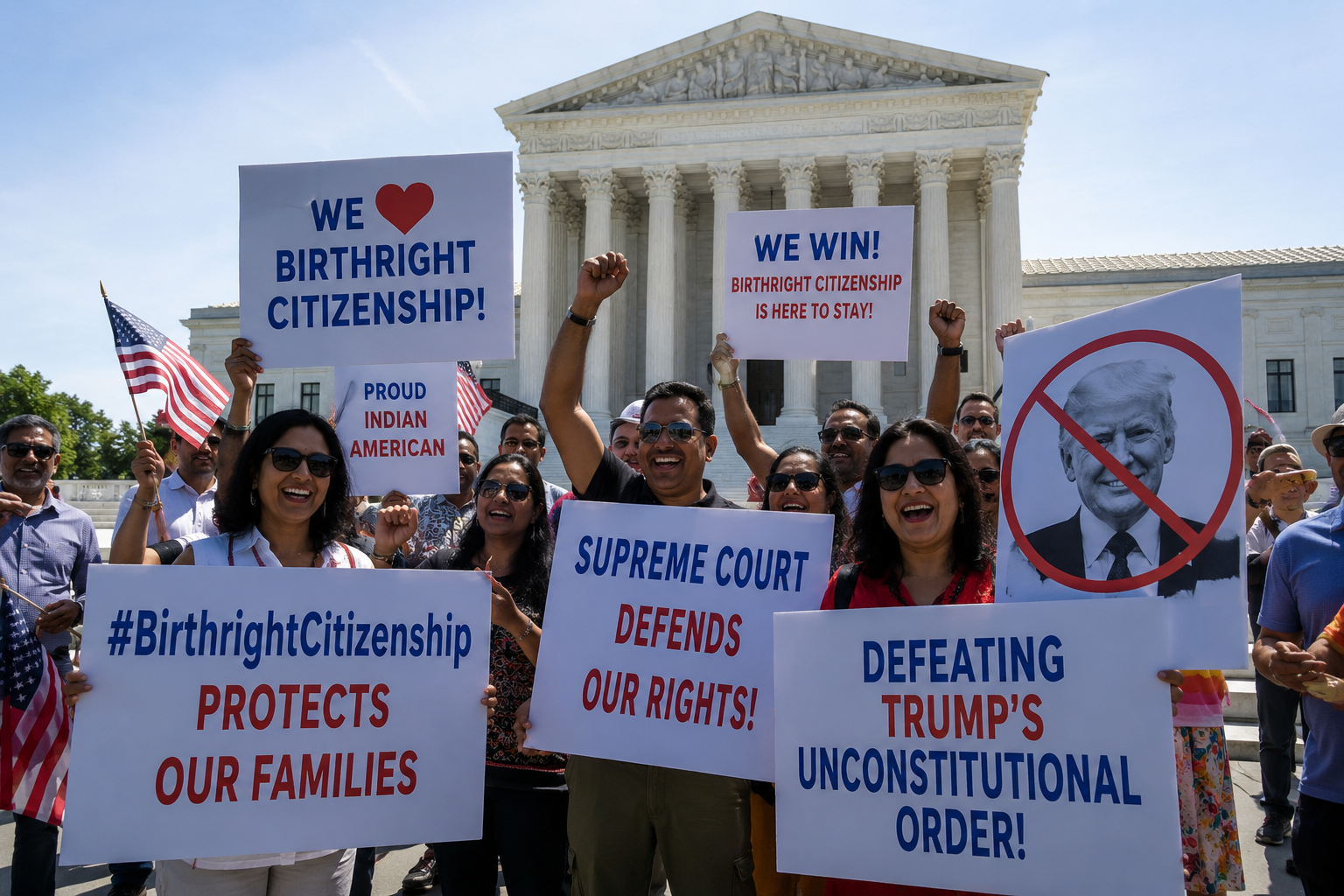
In a landmark decision with profound constitutional and social implications, the United States Supreme Court has reaffirmed the enduring principle of birthright citizenship, rejecting an attempt by President Donald Trump to end the automatic grant of U.S. citizenship to children born on American soil to undocumented immigrants and many temporary visa holders. The ruling preserves one of the nation's oldest constitutional guarantees and offers reassurance to millions of immigrant families, including thousands of Indian professionals working in the United States.
The judgment is being viewed as a defining moment in the continuing debate over immigration and constitutional rights. By refusing to narrow the scope of the Citizenship Clause of the Fourteenth Amendment, the Court reinforced the long-standing interpretation that nearly every child born within the territorial boundaries of the United States is automatically a U.S. citizen, regardless of the immigration status of his or her parents, except for a few well-established exceptions such as children of accredited foreign diplomats.
Trump's Executive Order Rejected
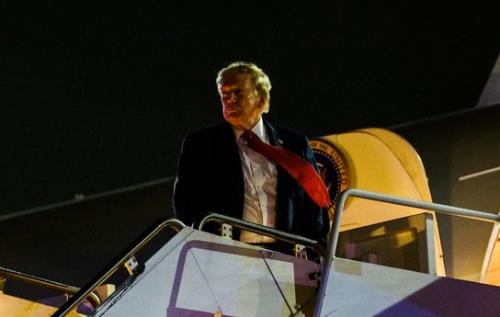
The legal challenge stemmed from an executive order signed by President Donald Trump on January 20, 2025, the first day of his second term in office. The order sought to deny automatic U.S. citizenship to children born in America if their mothers were either undocumented immigrants or temporary visa holders and the father was neither a U.S. citizen nor a lawful permanent resident.
Although the order never took effect because of nationwide injunctions issued by federal courts, it triggered one of the most significant constitutional battles in recent years. The administration argued that the Citizenship Clause of the Fourteenth Amendment had been interpreted too broadly and claimed that the phrase "subject to the jurisdiction thereof" should not apply to children whose parents owed primary allegiance to another country.
The Supreme Court rejected that argument, making it clear that such a fundamental constitutional guarantee cannot be altered through executive action. The ruling underscores that any attempt to redefine birthright citizenship would require either a constitutional amendment or a dramatic reversal of more than a century of settled constitutional precedent.
The Fourteenth Amendment Remains the Cornerstone
The Court based its decision firmly on the Fourteenth Amendment, adopted in 1868 following the Civil War to overturn the infamous Dred Scott decision and guarantee citizenship to formerly enslaved African Americans.
The amendment declares: "All persons born or naturalized in the United States, and subject to the jurisdiction thereof, are citizens of the United States and of the State wherein they reside."
For more than 150 years, those words have been understood to grant citizenship to almost everyone born in the United States. The Supreme Court reinforced this interpretation in its landmark 1898 decision in United States v. Wong Kim Ark, which held that a child born in San Francisco to Chinese immigrant parents was an American citizen despite restrictive immigration laws of that era.
That ruling has served as the constitutional foundation of birthright citizenship ever since, and the Court has once again chosen to uphold that principle.
A Major Relief for Indian-American Families, Indian-Americans Lawmakers and Organizations Welcome the Move
Among those most relieved by the verdict are Indian professionals working in the United States on H-1B visas. Hundreds of thousands of highly skilled Indians remain caught in decades-long employment-based green card backlogs, leaving their immigration status uncertain for years.
For these families, the Supreme Court's decision guarantees that children born in the United States will continue to receive automatic American citizenship with all the rights and protections it provides.
The judgment ensures that these children will enjoy permanent legal status, access to constitutional protections, voting rights upon adulthood, eligibility for public office, and the freedom to live and work anywhere in the United States regardless of their parents' immigration status.
"The ruling is a profound affirmation of who belongs in America. Indians and South Asian immigrant families are among those most directly threatened by Trump's executive order," Chinten Patel, the executive director of Indian American Impact, an organization promoting political involvement by the community, told news agency IANS.
Referring to the decades-long Green Card backlog for Indians on H1B visas, he said their "children are often born here long before their parents have a clear path to permanency".
"Today the Supreme Court looked at those families and said, 'Your children are Americans. They belong here," Patel said.
Congressman Raja Krishnamoorthi said the decision reaffirmed “a fundamental constitutional principle: every child born in the United States is an American citizen.”
“Since its ratification in the wake of the Civil War, the Fourteenth Amendment has enshrined the principles of equal citizenship and equal protection under the law, including its guarantee of birthright citizenship,” he said. “The Supreme Court’s decision makes clear that those constitutional rights cannot be rewritten by executive order because the Constitution, not the President, governs the rights of the American people.”
Virginia Congressman Suhas Subramanyam welcomed what he described as the court’s recognition that President Donald Trump’s executive order was unconstitutional.
“I’m glad the courts recognized that President Trump’s birthright citizenship executive order was a blatant and unconstitutional attempt to strip citizenship from children of immigrants all across the country,” he said.
“These immigrants are folks who have served our country in so many ways and contributed to the success of our economy. And make no mistake: they are American.”
Subramanyam added that lawmakers would “continue to push for long overdue, commonsense immigration reform and fight this administration’s blatant immigration overreach.”
Congresswoman Pramila Jayapal said the ruling reaffirmed that the Constitution could not be altered through executive action. “Donald Trump is not a king, and he cannot, with the stroke of a pen, change our Constitution. Today’s ruling rightly reaffirms that if you are born in America, you are American, plain and simple,” she said.
Jayapal added that she hoped the judgment would “settle this issue once in for all” and urged the administration to stop issuing executive orders that were “clearly illegal, anti-immigrant and traumatizing to Americans across the country.”
Michigan Congressman Shri Thanedar called the judgment “a major win for civil rights and the rule of law.”
“The Supreme Court did what the Constitution requires: it affirmed that people born in the United States are American citizens,” Thanedar said, adding that the decision was “a reminder of how fragile our rights can be.”
Among Community organizations also welcomed the ruling. The Foundation for India and Indian Diaspora Studies (FIIDS) said the decision carries particular significance for Indian Americans.
“Birthright citizenship has been a cornerstone of realizing the American Dream for immigrants,” said FIIDS President Khanderao Kand. He said the decision would allow “millions of families” to look to the future with greater certainty.
Kand said the ruling was especially important for “the nearly 5.2 million Indian Americans—including more than 1.2 million individuals waiting in the employment-based green card backlog and over 400,000 Indian H-1B professionals who contribute to America’s innovation, competitiveness, and economic growth.”
Indian American leader Bhavini Patel also welcomed the decision, calling it “a beautiful celebration and acknowledgement of the power of the US Constitution.”
“It recognizes that if you were born in the United States of America, you are an American,” Patel said. She added that the ruling recognized “the beauty of this country” and reaffirmed that “the fabric of this country is built on its diversity.”
Strong Political and Legal Reactions
The verdict drew widespread praise from constitutional scholars, civil rights organizations, immigration advocates, and Democratic lawmakers, who described it as a victory for the Constitution and equal protection under the law.
California Attorney General Rob Bonta, whose office played a leading role in challenging the executive order, said the ruling reaffirms that every child born in America deserves an equal opportunity to pursue the American Dream.
Former White House adviser Ajay Bhutoria described the decision as "a historic victory for justice, the Constitution, and the American Dream."
President Trump, however, criticized the judgment on his Truth Social platform, calling it "too bad for our Country." He urged Congress to pursue legislation aimed at ending birthright citizenship, although constitutional experts argue that any such law would almost certainly face immediate legal challenges because of the Supreme Court's reaffirmation of the Fourteenth Amendment.
The Dissenting View
While the majority reaffirmed existing constitutional doctrine, the decision was not unanimous.
Justices Clarence Thomas, Samuel Alito, and Neil Gorsuch argued for a narrower interpretation of the Citizenship Clause. In their dissent, they contended that the phrase "subject to the jurisdiction thereof" should receive closer historical scrutiny and might not have been intended to extend automatic citizenship to children born to parents who are in the country unlawfully or only temporarily.
According to the dissenting justices, individuals whose parents maintain primary political allegiance to another nation may not have been included within the original understanding of the Fourteenth Amendment.
Although their interpretation did not prevail, the dissent ensures that the constitutional debate surrounding birthright citizenship is likely to continue among legal scholars, policymakers, and political leaders.
A Debate That Continues
Supporters of restricting birthright citizenship argue that modern immigration patterns differ significantly from those existing when the Fourteenth Amendment was adopted. They contend that automatic citizenship encourages illegal immigration and promotes so-called "birth tourism," where foreign nationals travel to the United States specifically to give birth so their children obtain American citizenship.
Those defending the current interpretation reject that argument, maintaining that immigration policy and constitutional citizenship are separate legal questions. While Congress has broad authority to regulate immigration, they argue, it cannot strip constitutional protections from children born within the United States.
They also point out that birthright citizenship has played a vital role in integrating successive generations of immigrants into American society, contributing to the country's economic growth, cultural diversity, and democratic strength.
A Powerful Reaffirmation of Constitutional Values
Beyond immigration policy, the Supreme Court's ruling represents a powerful affirmation of judicial independence and constitutional stability. It reinforces the principle that fundamental rights guaranteed by the Constitution cannot be rewritten through executive orders or shifting political priorities.
For millions of immigrant families—including Indian Americans, Hispanics, Asians, Africans, and countless others—the decision provides certainty that their American-born children will continue to enjoy the full protections of U.S. citizenship.
While debates over border security, immigration reform, and legal migration will undoubtedly continue in Congress and on the national political stage, the Court has made one point unmistakably clear: birthright citizenship remains a constitutional guarantee deeply rooted in the nation's history.
More than 150 years after the adoption of the Fourteenth Amendment, the Supreme Court has once again affirmed that citizenship by birth is not merely an immigration policy—it is one of the defining promises of the American Constitution, safeguarding equality under the law for generations to come.
(With the input of IANS and other agencies report)