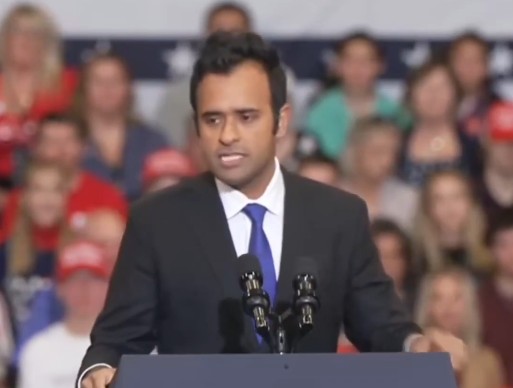
COLUMBUS, Ohio: A controversial attack advertisement by Republican gubernatorial candidate Vivek Ramaswamy targeting his Democratic rival, Amy Acton, appears to have backfired, intensifying criticism within his own party and potentially strengthening his opponent less than a week before the November 3 midterm elections. A new poll shows Acton holding a narrow lead, while voters’ reactions suggest the deeply personal advertisement has done little to improve Ramaswamy’s standing.
The Suffolk University-USA TODAY poll, conducted October 21-26 among 500 likely voters, found Acton leading Ramaswamy by 48% to 44%, with Libertarian candidate Don Kissick receiving 3.6%. The margin of error was plus or minus 4.4 percentage points, meaning the contest remains statistically too close to call. Nevertheless, the findings offer little evidence that Ramaswamy’s aggressive advertising strategy has delivered the breakthrough his campaign may have hoped for.
The advertisement, which began circulating online earlier in the week, features Acton’s estranged mother, Donna Arthur, accusing her daughter of lying about her childhood and questioning her mental health. Arthur disputes Acton’s account of experiencing poverty and homelessness, including living in a tent as a child, and urges Ohioans not to vote for her.
However, the advertisement omits crucial context about the family’s history. Acton and her mother have been estranged since 1978, when Acton was 12 and was removed from her mother’s custody after her stepfather was charged with raping her. Although he pleaded not guilty, he failed to appear in court and was never tried. Acton and her brother have publicly described the abuse they experienced during childhood. Her mother remained married to the stepfather until his death.
The omission of this painful background has fueled accusations that the campaign crossed ethical boundaries by exploiting a candidate’s childhood trauma for political advantage. Acton’s campaign responded with a statement describing her experiences and an advertisement featuring her brother, Phil Stearns, who defended her account and said she endured severe abuse while trying to protect him.
The polling provides an early indication of the controversy’s impact. Seventy-two percent of respondents said they had seen or heard about the advertisement. Among those who reported changing their voting preference, seven moved toward Acton, while only one shifted toward Ramaswamy. Although these numbers alone cannot establish that the advertisement caused the changes, they suggest that its immediate effect may have favored the Democratic candidate.
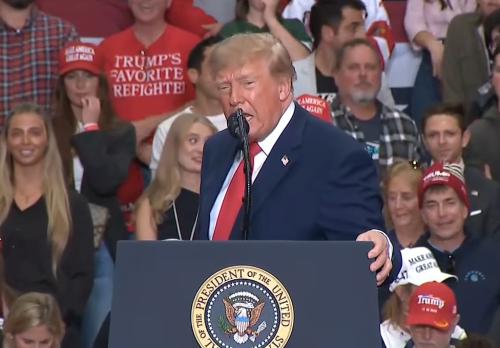
The controversy has also divided prominent Republicans. President Donald Trump praised the advertisement as “very powerful” and encouraged Ramaswamy to continue running it. Vice President JD Vance similarly defended the campaign, urging Republicans to stop complaining about the controversy and concentrate on winning.
Other Republican leaders have expressed serious reservations. Ohio Governor Mike DeWine, who has endorsed Ramaswamy, described the advertisement as deeply troubling and urged the campaign to withdraw it. Senator Jon Husted has also distanced himself from the controversy. DeWine’s criticism is particularly significant because it demonstrates that the dispute extends beyond Democratic opposition and into the Republican establishment itself.
Political observers see the episode as a reflection of a wider divide within the Republican Party between traditional standards of campaigning and the more confrontational political approach associated with Trump and his allies.
Some analysts have suggested that Ramaswamy’s advertisement represents a high-risk attempt to change the direction of a tightening race. David Paleologos, director of Suffolk University’s Political Research Center, compared the strategy to a desperate, last-minute gamble that could either produce a breakthrough or be intercepted by voters.
The poll also examined Portage County, a longtime political bellwether east of Akron that Trump carried by more than 15 percentage points in 2024. In a separate survey of 300 likely voters, Acton received 47.3% support, compared with 46.7% for Ramaswamy and 2% for Kissick. With a margin of error of plus or minus 5.6 percentage points, the results again indicate a closely divided electorate.
Acton, 60, is a physician and former director of the Ohio Department of Health who became nationally recognized for leading the state’s response to the COVID-19 pandemic. Raised in Youngstown, she has spoken publicly about her experiences with poverty, homelessness and childhood abuse. Ramaswamy, an Ohio-born entrepreneur and political figure, is campaigning with Trump’s endorsement. Neither candidate has previously held elected office.
The backlash has reportedly helped generate financial support for Acton, including a $500,000 donation from MK Pritzker, wife of Illinois Governor JB Pritzker. The Cook Political Report also shifted its assessment of the governor’s race from a toss-up to leaning Democratic, citing the advertisement’s fallout and an existing movement toward Acton.
Ohio remains an important political battleground, although Republicans have held the governorship since 2011 and the state has supported Trump in the past three presidential elections. An Acton victory would give Democrats control of the governor’s office for the first time in 20 years.
With early voting already underway, the ultimate effect of the controversy remains uncertain. Undecided voters could still determine the outcome. But the episode has transformed a closely contested gubernatorial race into a debate over political decency, personal privacy and the limits of negative campaigning.
For Ramaswamy, the central question is whether the attack will mobilize Republican voters or alienate moderates who consider the use of a candidate’s traumatic family history unacceptable. For Acton, the challenge is to convert the sympathy and attention generated by the controversy into votes. The latest polling suggests that, at least for now, the gamble has not delivered the advantage Ramaswamy needed.
(With the input of Agencies reports)