India Tribune Newsdesk
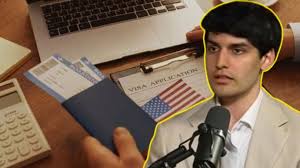
Chicago: Nalin Haley, the son of former US ambassador to the United Nations and former Republican presidential contender Nikki Haley, has renewed his criticism of the H-1B visa program, calling for a complete ban amid prolonged US visa stamping delays that have left hundreds of Indian professionals stranded in India. His remarks, posted on social media, have sparked fresh debate over skilled immigration, remittances, and public safety in the United States.
Reacting to reports that many Indian H-1B visa holders were unable to return to the US after travelling home for mandatory visa stamping, Nalin mocked the affected workers and dismissed concerns raised by the Indian government. “Delaying visas is good, but not good enough. We need a complete H-1B visa ban,” he wrote, resharing a post referencing India’s diplomatic outreach to Washington over the issue. He added, “You can’t be stranded in your own country,” arguing that those impacted were not victims of injustice.
Nalin further accused the Indian government of raising the matter for financial reasons rather than concern for its citizens. “The Indian government is only complaining because they want their remittance money,” he wrote, suggesting that India’s interest in resolving the issue was driven by foreign currency inflows sent home by overseas professionals.
The controversy comes as India’s Ministry of External Affairs acknowledged widespread difficulties faced by Indian nationals working in the US. According to the ministry, many professionals who travelled to India for visa stamping were later informed that their appointments had been postponed by months or even years. In several cases, interviews initially scheduled for early 2025 were pushed to late 2026. “Several people have been stranded in India for quite some time due to their H-1B visa appointment delays, causing hardship for their families,” the ministry said, adding that the issue had been raised with US authorities in New Delhi and Washington.
The delays have disrupted lives and careers, leaving many workers uncertain about their employment status, ability to work remotely, and future travel plans. Immigration experts have warned H-1B holders to avoid international travel if possible, citing expanded screening measures and growing backlogs at US consulates in India.
Nalin Haley has been a consistent and vocal critic of the H-1B program, arguing that it disadvantages American graduates during a weak job market. He has said many of his college friends remain unemployed despite strong academic credentials. “We should keep our kids first,” he has said, claiming that none of his close friends had secured jobs more than a year after graduating.
His hardline views extend beyond skilled visas. In recent months, Nalin has argued against dual citizenship, called for limits on foreign students at US universities, and suggested that naturalised citizens should not hold public office. In an interview with conservative commentator Tucker Carlson, he claimed that some foreign students could pose security risks and said loyalty to the US should be exclusive.
Despite coming from a family with an immigration history—his grandfather emigrated from Punjab to the US—Nalin has sought to distance himself from his Indian roots, repeatedly stating that his allegiance lies solely with America.
His comments have drawn criticism for their tone and implications, particularly at a time when thousands of professionals remain caught in bureaucratic uncertainty. As the H-1B program faces renewed scrutiny, Nalin Haley’s statements have added fuel to an already polarized national debate over immigration, jobs, and the role of foreign talent in the US economy.