By Prashant Shah
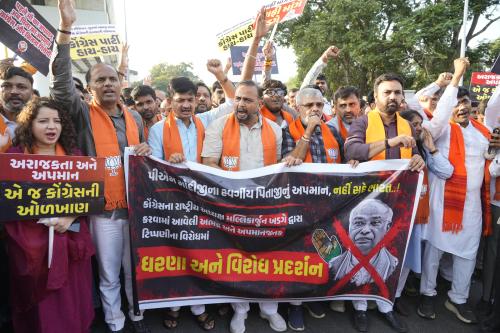
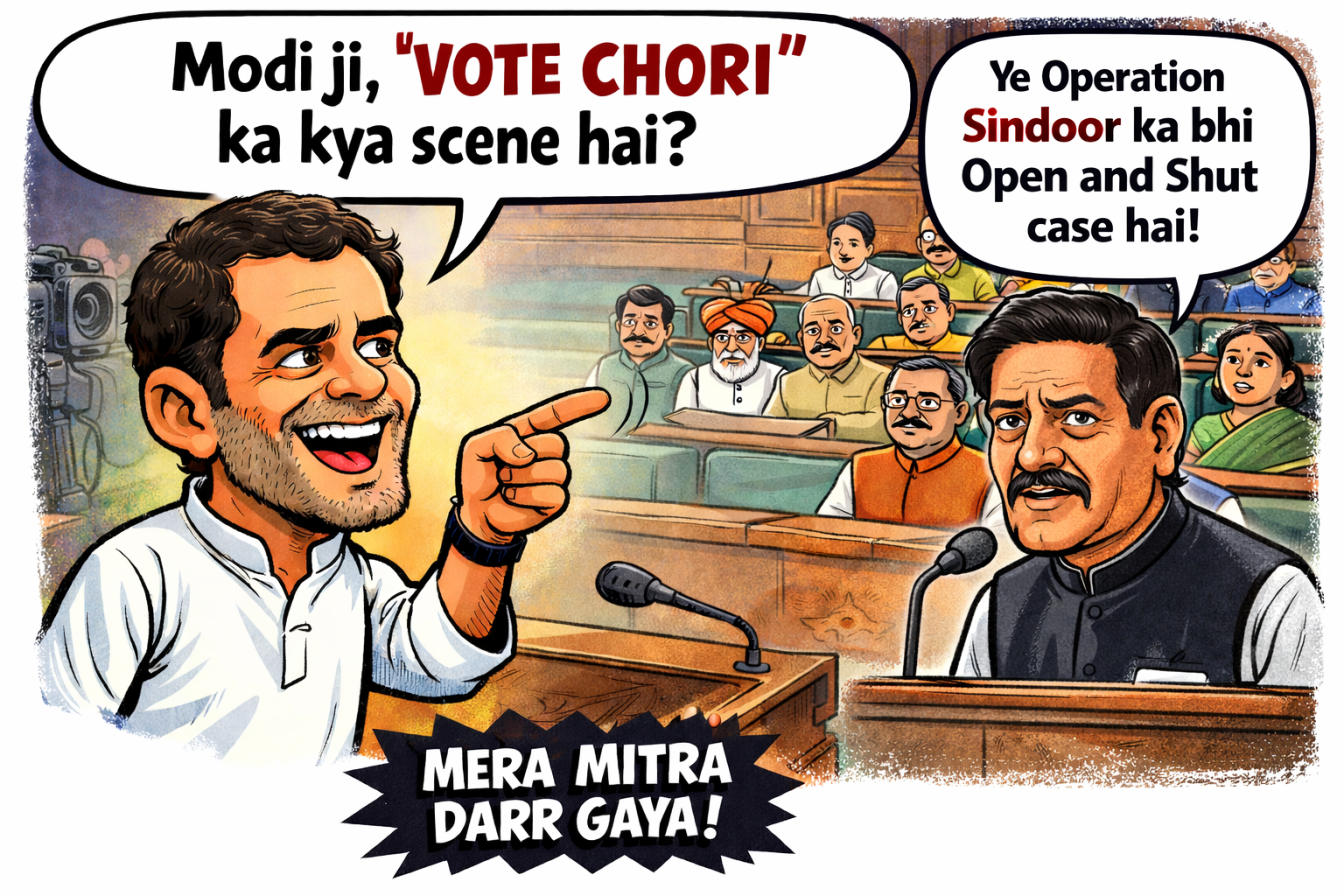
Lately, opposition criticism of the Prime Minister has become a daily routine, often crossing the boundary between democratic dissent and irresponsible rhetoric. Such constant attacks may momentarily serve political objectives, but they risk diminishing the stature of India’s highest executive office not only within the country but also on the global stage. When narratives framed as criticism slip into anti-national commentary, they weaken India’s collective voice and credibility in an increasingly competitive world order.
More alarming is the repeated doubting of the bravery and integrity of the Indian Armed Forces by certain political voices. The armed forces are not extensions of any party or ideology; they are national institutions built on sacrifice, discipline, and honor. Questioning their courage without evidence demoralizes soldiers and emboldens hostile forces. This trend is not mere politics—it is a wake-up call for India’s internal security and civic responsibility. Democratic debate must continue, but it must be rooted in facts, restraint, and respect for institutions that safeguard the nation’s sovereignty.
A nation survives not merely on borders and weapons, but on discipline, shared responsibility, and respect for its constitutional institutions. Freedom of expression is a pillar of democracy, yet no freedom exists in isolation from duty. When speech is weaponized to weaken national unity, undermine constitutional authority, or recklessly malign the armed forces, it ceases to be dissent and becomes sabotage of the collective spirit. India, with its long civilizational memory and hard-earned sovereignty, cannot afford complacency in the face of such erosion.
Democracy is not a license for chaos. The Constitution guarantees liberty, but it also empowers the State to impose reasonable restrictions in the interest of sovereignty, security, public order, and national integrity. These are not ornamental words; they are safeguards written with the blood and sacrifice of those who defended the nation. Any society that allows its foundational institutions to be routinely slandered without consequence invites internal decay. Strong nations do not apologize for enforcing discipline; they codify it clearly and apply it uniformly.
There is an urgent need for stern, unambiguous laws that clearly define and punish anti-national conduct, deliberate disinformation, and reckless allegations that harm India’s standing and internal cohesion. Such laws must be precise, evidence-based, and constitutionally sound, but also uncompromising in intent and execution. Vague outrage helps no one; firm statutes with strict penalties act as deterrents. Fast-track judicial mechanisms should ensure swift resolution so that justice is neither delayed nor politicized, preserving both national security and legal fairness.
Public discourse today is polluted by sensationalism, performative outrage, and irresponsible commentary masquerading as courage. The louder the accusation, the thinner the evidence often becomes. This culture corrodes democratic debate and replaces reason with spectacle. In a mature republic, criticism must be backed by proof, logic, and accountability. Baseless claims against constitutional offices or national institutions should attract severe legal consequences, including disqualification from public life where appropriate. Responsibility must rise in proportion to influence.
Parliament, as the supreme forum of the people’s will, is not a playground for provocation. It is a sacred space where words carry weight and consequences. Any attempt to demean its dignity through unfounded allegations, calculated disruption, or repeated misuse of privilege must be met with strict ethical enforcement. Parliamentary privileges exist to serve the nation, not to shield irresponsibility. Clear procedures must ensure that those who abuse this platform are held answerable under established rules, without favoritism or fear.
Most sacrosanct of all is the honor of the armed forces. Soldiers stand guard so that citizens may argue freely. They operate in unforgiving terrains, away from families, under constant threat, bound by discipline and silence. To casually insult, defame, or question their bravery without evidence is not dissent; it is moral bankruptcy. A nation that tolerates the public humiliation of its defenders weakens its own spine. Laws protecting the dignity of the armed forces must be strengthened, with strict punishment for deliberate defamation, misinformation, or propaganda intended to demoralize them.
Accountability, however, must always flow through lawful channels. The strength of India lies in its institutions, not in mob sentiment or arbitrary punishment. The answer to irresponsible speech is not lawlessness, but stronger law. The response to provocation is not chaos, but clarity. When rules are firm, evenly applied, and swiftly enforced, they command respect and deter excess. When they are weak or selectively used, they invite contempt.
National unity does not mean uniformity of opinion. Debate, disagreement, and critique are essential to progress. But there is a clear line between constructive criticism and destructive conduct. Crossing that line must have consequences. Patriotism is not blind praise, but it is also not reckless denigration. It demands balance: the courage to question and the discipline to respect. Those who enjoy the freedoms of this republic must also bear the responsibility of preserving its integrity.
India stands at a moment where internal cohesion is as vital as external defense. Economic growth, global influence, and technological advancement mean little if the nation is hollowed out from within by cynicism and contempt. A firm legal framework that protects national dignity, enforces accountability, and upholds constitutional values is not authoritarianism; it is self-preservation. History is unforgiving to nations that fail to defend themselves from internal corrosion.
The message must be clear and unequivocal: freedom of speech does not include freedom to weaken the nation. Authority does not mean immunity from scrutiny, but criticism must be truthful, responsible, and provable. Institutions are not above the law, but neither should they be dragged through mud for applause. The armed forces are not political tools, but the shield of the nation, deserving unwavering respect.
A strong India requires strong laws, strong institutions, and strong civic discipline. Sentiment alone will not protect sovereignty; structure will. Noise will not build trust; accountability will. By reinforcing legal deterrence, ethical standards, and respect for national institutions, India can ensure that democracy remains robust, responsible, and resilient. This is not about silencing voices; it is about elevating discourse. Not about fear, but about firmness. Not about repression, but about respect—for the nation, its Constitution, and those who stand guard over its future.