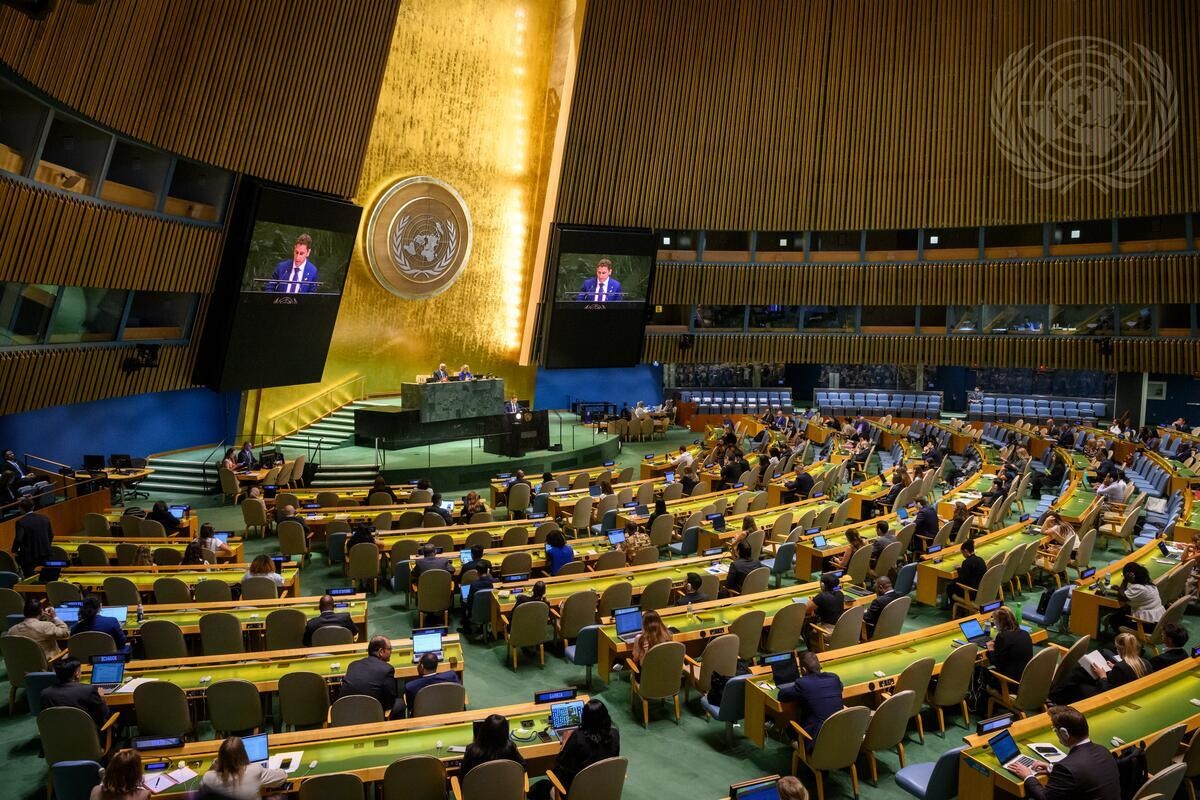
United Nations, Sep 21 (IANS) This week 140 world leaders and representatives of another 53 countries will be meeting here this week under the shadow of intractable wars and conflicts for the annual high-level meeting.
When the meeting starts on Tuesday with the traditional first national address by Brazil's President Lula da Silva, followed by US President Donald Trump, the Gulf Conflict, the Ukraine War, the Gaza situation, and the Sudan civil war of genocidal proportions will hang heavy over the General Assembly chamber.
The perils of a runaway artificial intelligence will be added this year to the climate crisis, terrorism, and global hunger and poverty as top areas of concern.
The high falutin speeches in the General Assembly chamber, threaded with boasts and recriminations, but also genuine insights into global problems, may be the face of the high-level meeting, but the real action is in the meetings in missions, hotels and temporary cubicles erected in the UN hallways.
And even in informal encounters in the halls of the UN.
Cynics will say nothing substantial to find solutions to the crises will emerge from the lectures, but results can emerge from these meetings on the sidelines of the official high-level meeting.
Secretary-General Antonio Guterres, speaking to reporters, said about the utility of the high-level week, "I think we must take profit of this week to allow for a large number of meetings between those leaders that are relevant in the context of the crisis that we are facing".
"I would remind you that last year, there was a very important meeting of the United States with a number of Muslim countries that led to the peace plan for Gaza", he said.
Even Trump, a constant critic of the UN, agreed with him on this point about the session's utility, telling reporters that the formation of the Board of Peace for Gaza flowed from that meeting last year.
Bangladesh Foreign Minister Khalilur Rahman, who was elected General Assembly president for the current session, will preside over the meeting from the high rostrum, above the speaker's lectern.
“Restoring trust, managing transformation: A UN that delivers for all”, is the theme this year.
As presidents, kings, prime ministers and ministers take their turn at the dark marble lectern with a gold UN insignia, three major leaders will not be there: Prime Minister Narendra Modi and Presidents Xi Jinping of China and Vladimir Putin of Russia.
External Affairs Minister S Jaishankar will deliver India's address to the General Assembly on Saturday.
Xi's absence from the UN this week will be striking because he will be coming to the US to meet Trump in Washington on Thursday.
But a notable presence will be Iran's President Masoud Pezeshkian, who will be speaking a day after Trump of the US, his nation's adversary in the conflict now in its seventh month.
Ukraine's President Volodymyr, whose country is now facing the fifth year of Russia's invasion, will be there.
While Israel's Prime Minister Benjamin Netanyahu will be taking the podium on Thursday to justify his country's widely condemned actions in Gaza, the US shut out Palestine's President Mahmoud Abbas by denying him a visa.