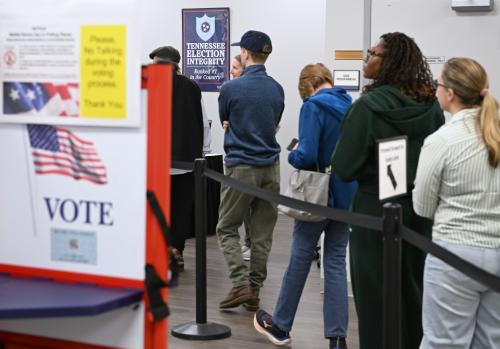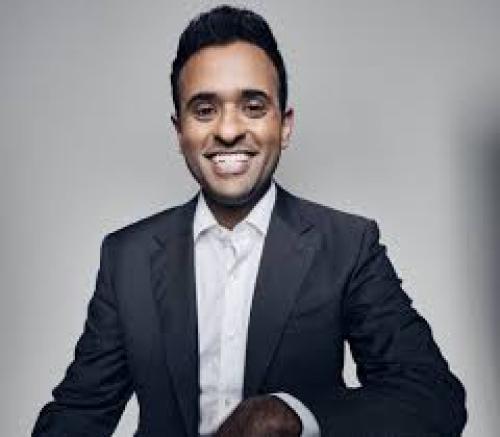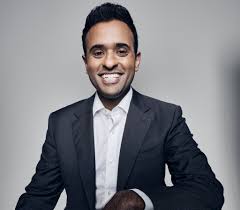
COLUMBUS, Ohio — November 4, 2026: Vivek Ramaswamy's campaign to become Ohio's next governor ended in defeat on November 3, as Democratic candidate Dr. Amy Acton won the gubernatorial election, according to media projections. The result marked a significant setback for the Republican businessman, whose campaign had attracted national attention but faced mounting controversy in its final weeks.
With more than 95 percent of votes reported in preliminary results, Acton received approximately 52.31 percent, compared with 44.38 percent for Ramaswamy. Libertarian candidate Don Kissick received about 3.30 percent. The outcome was particularly notable because President Donald Trump had carried Ohio by more than 11 percentage points in the 2024 presidential election.
The most damaging controversy erupted in October when Ramaswamy's campaign released a 60-second advertisement featuring Acton's estranged mother, Donna Arthur. In the advertisement, Arthur accused her daughter of lying about her childhood and urged voters not to support her. The controversy was particularly sensitive because Acton had publicly described experiencing homelessness as a child and being sexually abused by her stepfather when she was 12. Court documents and contemporaneous accounts examined by FactCheck.org corroborated important parts of Acton's account.
The advertisement prompted criticism from Republicans as well as Democrats. Ohio Gov. Mike DeWine and several other prominent political figures urged Ramaswamy to withdraw it. Alumni of his former high school in Cincinnati and even a former teacher publicly criticized the campaign's decision. President Trump and Vice President JD Vance, however, defended Ramaswamy's decision to run the advertisement. The campaign eventually stopped airing it approximately one week before Election Day. Although Ramaswamy had initially announced a $4 million advertising investment, tracking data indicated that approximately $1 million was spent on the controversial spot.
Whether the advertisement directly changed enough votes to determine the election cannot be established from the results. However, polling offered some indication of the controversy's political consequences. An internal Republican poll reported by Axios showed Acton's lead increasing from two to eight percentage points after the advertisement surfaced. A separate survey also found more respondents who had seen the advertisement saying it made them more inclined to support Acton than Ramaswamy. These findings suggested that the campaign's strategy carried risks, although they do not independently prove that the advertisement caused the eventual defeat.
Beyond the controversy, the economy emerged as a central concern for Ohio voters. Rising grocery prices, fuel costs, electricity bills, housing expenses and property taxes placed pressure on household budgets. Many voters expressed frustration that their paychecks were not keeping pace with the increasing cost of everyday necessities.
Both candidates promised economic relief, but their approaches differed. Ramaswamy campaigned under the slogan "Lower Costs. Bigger Paychecks." He proposed phasing out Ohio's state income tax over a decade, rolling back property taxes, reducing government spending, cutting regulations and expanding energy production. He also pointed to efforts to suspend the state's gas tax as an example of immediate relief for motorists. His argument was that lower taxes and a business-friendly environment would attract investment, create jobs and strengthen Ohio's economy.
Acton, meanwhile, emphasized affordability through tax relief for working families, housing assistance, healthcare affordability and expanded support for children. Her proposals included a working-family tax cut that could return approximately $1,800 to a family of four earning $60,000 annually, along with a child tax credit and property tax relief. She also promised to address medical debt and rising energy costs. Her campaign connected these proposals with her personal experiences growing up in difficult economic circumstances.
The candidates also approached their political backgrounds differently. Ramaswamy presented his success as an entrepreneur and businessman as evidence that he could bring private-sector efficiency to state government. A prominent supporter of President Trump, he had already gained national recognition during his 2024 presidential campaign. Acton, a physician and former director of the Ohio Department of Health, was known for her role during the COVID-19 pandemic under Gov. DeWine. Republicans criticized her handling of pandemic restrictions, particularly decisions affecting schools and businesses, while she defended her public health record and emphasized healthcare access and economic security.
Ramaswamy also enjoyed considerable financial and political support. Trump and Vance made campaign appearances in Ohio, and Republican allies invested heavily in efforts to defeat Acton. According to the Associated Press, more than $100 million was spent against her. Nevertheless, the Democratic candidate succeeded in presenting the election as a choice about economic security, healthcare and the direction of state government.
Acton's victory is historic. She becomes the first woman elected governor of Ohio and the first Democrat elected to the office in 20 years. Her victory also represents a major Democratic breakthrough in a state that had moved increasingly toward Republicans. The result is particularly noteworthy considering Trump's substantial victory in Ohio in 2024.
For Ramaswamy, the defeat raises questions about the limits of national political popularity, campaign spending and business credentials in a state-level election. His campaign brought considerable attention to Ohio, but national recognition and powerful endorsements did not translate into sufficient electoral support. His defeat should not automatically be attributed to one advertisement or one economic issue. The election reflected a combination of candidate personalities, policy differences, public concerns and the political environment.
The Ohio election offers an important lesson about American electoral politics: voters ultimately judge candidates not only by their political connections, campaign resources or public profiles, but also by how convincingly they address the everyday concerns of ordinary families. For Ohio Republicans, the result presents a challenge to reassess their message and strategy. For Democrats, Acton's victory creates an opportunity to demonstrate that their promises on affordability, healthcare and economic opportunity can be translated into effective governance.
The real test for the incoming governor will now be whether the promises made during the campaign can produce measurable improvements in the lives of Ohio residents.
(With the input of different agencies reports)