Washington/New Delhi, Oct. 9: The Trump administration’s decision to suspend eight major technology and IT-services companies from the employment-based green-card sponsorship process has triggered a widening debate over legal immigration, American jobs and the country’s dependence on highly skilled foreign professionals. The move has drawn sharp criticism from Indian-American Congresswoman Pramila Jayapal, a strong response from India and calls from a diaspora advocacy organisation for safeguards to protect law-abiding foreign workers and their families.
The controversy intensified after Vice President JD Vance defended the administration’s action and described certain foreign professionals working in the United States as “indentured servants.” India strongly objected to the terminology, while Microsoft disputed allegations that it uses H-1B workers to replace American employees or suppress wages.
The developments could have significant consequences for Indian technology professionals who depend on employer-sponsored immigration pathways to obtain permanent residency in the United States.
Eight Companies Face Restrictions
On October 8, the Trump administration announced the suspension of eight major companies from the Permanent Labour Certification, or PERM, programme. The companies named were Cognizant, Infosys, Tata, Wipro, HCL, Capgemini, Microsoft and Adobe.
U.S. Labour Secretary Keith Sonderling said the action was linked to ongoing federal and criminal investigations. The restrictions prevent the affected employers from filing new PERM applications and halt the processing of pending applications under the programme.
PERM is generally an initial step in several employer-sponsored employment-based green-card categories. It requires employers to demonstrate that hiring a foreign worker will not adversely affect the wages and working conditions of similarly employed American workers.
The administration contends that some companies have exploited employment-based immigration programmes at the expense of American workers. Sonderling said the companies identified by the government had collectively requested almost three million foreign workers since 2009, receiving more than 230,000 H-1B visa approvals and over 100,000 permanent labour certifications.
He argued that the figures represented a substantial number of employment opportunities that, in the administration’s view, could otherwise have gone to Americans.
The government’s action came amid broader efforts to tighten employment-based immigration rules. A day earlier, the Department of Homeland Security had proposed new fees for international students seeking to participate in Optional Practical Training, describing the measure as part of an effort to protect American workers and strengthen the integrity of the immigration system.
Vance Accuses Companies of Undercutting Americans
Vance has strongly defended the restrictions, arguing that companies should not be allowed to lay off American employees while continuing to bring in or retain foreign workers through employment-based visa programmes.
At a news conference addressing visa fraud, the vice president claimed that H-1B workers earned approximately $20,000 less than American citizens in comparable positions. He said workers brought in through foreign outsourcing firms could earn $48,000 less than Americans in similar jobs.
Vance alleged that some companies benefit financially by hiring foreign workers at lower wages while displacing American employees. He characterised such practices as exploitation and argued that the immigration system should not become a source of inexpensive labour for large corporations.
He also cited Microsoft as an example, claiming that the company had laid off 6,000 American workers in the past year while benefiting from 6,300 H-1B visas and nearly 3,000 green cards.
Using those figures, Vance accused the company of replacing American employees with foreign workers.
Responding to Jayapal’s criticism of the restrictions, Vance said, “‘Socialism’ apparently means fighting like hell to ensure megacorporations have a never-ending flow of cheap labour.”
His remarks have sharpened the political dispute over whether employment-based immigration primarily supports American innovation and economic growth or, when abused, undermines domestic workers’ wages and job security.
India Calls Remarks Offensive
India’s Ministry of External Affairs strongly objected to Vance’s description of foreign professionals as “indentured servants,” calling the terminology unwarranted and dismissive of the contributions Indian workers make to the American economy.
The ministry said Indian professionals in the United States were highly educated and skilled contributors to the country’s economy and innovation ecosystem.
It also emphasised that generations of immigrants had helped shape America’s growth and prosperity. The use of terminology associated with painful historical and colonial legacies, the ministry said, was deeply offensive.
India’s response reflects concern not only about the language used to describe Indian professionals but also about the practical consequences of restrictions that could interrupt their progress toward permanent residency.
Many Indian technology workers enter the United States on H-1B visas and subsequently rely on employer-sponsored green-card procedures to establish long-term lives with their families. A suspension affecting their employers’ PERM applications can create uncertainty over that process, particularly for workers whose cases are already pending.
The reported suspension, however, does not by itself revoke existing H-1B visas or require affected employees to leave the United States.
Jayapal Defends Legal Immigration
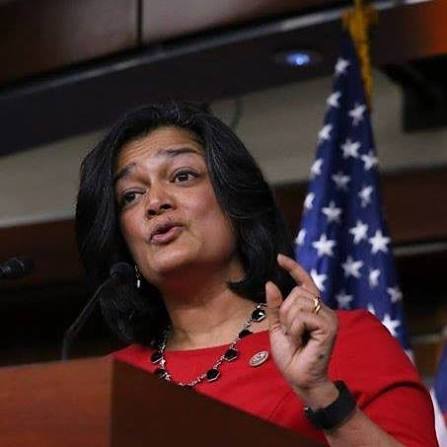
Congresswoman Pramila Jayapal, a Democrat from Washington state and the top Democrat on the House Immigration Subcommittee, criticised the administration’s decision as an attack on legal immigration.
Jayapal, who previously held an H-1B visa, represents a district connected to Microsoft’s home state and said the company had supported comprehensive immigration reform.
She argued that PERM provides a structured route toward employment-based permanent residency, with requirements intended to protect American workers while enabling employers to recruit qualified professionals from abroad.
“You don’t fix a broken immigration system by taking a hammer to legal immigration,” Jayapal said.
She warned that restricting legal pathways could weaken America’s ability to innovate and undermine businesses, families and communities that depend on skilled immigrants. Rather than reducing opportunities for lawful immigration, she called for modernising the system to make it more effective and responsive to economic needs.
Jayapal also stressed that immigrants contribute across many sectors, including technology, and that legal immigration policy should protect workers from unscrupulous employers without penalising those who follow the rules.
Her criticism drew Vance’s accusation that her position effectively defended large corporations’ access to inexpensive labour. The exchange has highlighted a wider political divide over how to balance immigration enforcement, domestic employment and the need for specialised talent.
Microsoft Rejects Allegations
Microsoft has defended its H-1B practices, saying its applications primarily concerned existing employees rather than newly recruited foreign workers.
The company stated that approximately 80 per cent of the roughly 6,000 H-1B applications it submitted during the last fiscal year were intended to extend or change the immigration status of employees already working for the company.
Microsoft said the remaining applications involved people who were already legally present in the United States and had decided to join the company. It said these applications represented approximately 1 per cent of its American workforce and did not involve new arrivals to the country.
The company also rejected suggestions that it pays foreign professionals less than American employees performing comparable work. It said its H-1B employees are paid the same as other employees doing comparable jobs and emphasised that most of its U.S. workforce consists of Americans.
Microsoft said it looked forward to providing the administration with additional information about its recruitment and hiring practices.
The company’s statement did not specify how long the PERM restrictions might remain in force or disclose how many employees’ permanent-residency applications could be affected.
FIIDS Seeks Fair Enforcement and Worker Safeguards
The Foundation for India and Indian Diaspora Studies (FIIDS), an Indian-American policy advocacy organisation, has urged the administration to pursue evidence-based enforcement while protecting professionals and families who have complied with immigration requirements.
FIIDS said companies that violate recruitment, wage or certification rules should be held accountable. However, it cautioned against assuming that foreign workers are replacing Americans simply because a company has conducted layoffs while filing visa applications.
The organisation called for investigators to compare actual job responsibilities, work locations, required skills and employment conditions. It also urged authorities to distinguish new foreign hires from existing employees seeking visa extensions or changes of immigration status.
Khanderao Kand, FIIDS’ chief of policy and strategy, warned that blanket restrictions could harm legitimate applicants who had no responsibility for any alleged employer misconduct.
FIIDS urged the Department of Labour and U.S. Citizenship and Immigration Services to issue clear implementation guidelines, establish a time-bound review process and publish transparent criteria for restoring companies’ eligibility. It also called for safeguards against avoidable delays and missed immigration filing deadlines.
“Protecting American workers and attracting specialized global talent are complementary goals,” Kand said.
The unfolding dispute presents the administration with a difficult challenge: enforcing immigration laws and protecting American workers without unnecessarily disrupting the lives of skilled professionals who have followed established legal procedures.
For thousands of Indian technology workers and their families, the outcome could determine whether years of professional contribution and progress toward permanent residency continue uninterrupted. For American companies, it raises questions about access to specialised talent. And for policymakers in Washington and New Delhi, it underscores the importance of distinguishing proven misconduct from legitimate employment-based immigration.
The central issue now is whether enforcement can be rigorous, transparent and fair while preserving both American workers’ protections and the country’s ability to attract global talent.
(With the input of IANS, ANI and other agency reports)