Dhaka, Nov 22 (IANS) Bangladesh Prime Minister Tarique Rahman is unsettled by the widespread public response to recent strikes and shutdowns called by the Awami League ahead of former Prime Minister Sheikh Hasina's proposed return to the country, according to a recent report.
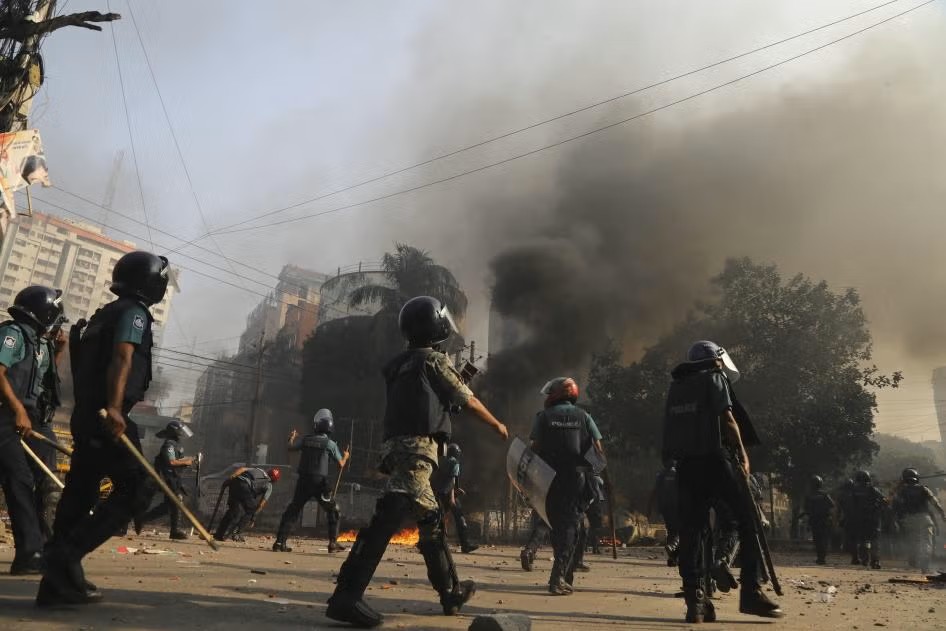
The country has witnessed renewed political unrest, including widespread violence, arson attacks, crude bomb explosions and deadly clashes, amid protests organised by supporters of ousted former Prime Minister Sheikh Hasina ahead of her planned return from exile in India.
"The Prime Minister (Tarique Rahman), barely into his ninth month in office, is clearly unnerved by the widespread public response to recent strikes and lockdowns by the Awami League ahead of their supremo's planned return to Bangladesh to face justice," Subir Bhaumik wrote in an opinion article published in Eurasia Review.
According to the article, the Awami League, which remains one of the country's largest political parties, has been banned since it was removed from power in August 2024.
The interim government led by Nobel laureate Muhammad Yunus had imposed restrictions on the party's political activities, a decision that the article said went beyond the mandate of the interim administration.
However, the newly elected Bangladesh Nationalist Party (BNP) government went a step further by formalising the ban through Parliament, further deepening the political confrontation, the report said.
With Hasina's proposed return approaching, a development that sceptics continue to view with uncertainty, the Awami League has announced a sustained programme of protests and political agitation.
According to the article, the BNP government missed an opportunity for political reconciliation that could have emerged had it lifted the ban on the Awami League. Instead, it chose a confrontational approach towards the opposition party.
The article also alleged that the BNP government had allowed its party cadres to resort to large-scale violence, citing the unrest that rocked Narail on Friday as an example.
It also warned that the Awami League, which is fighting for its political survival, could retaliate with whatever means available to it.
Such an escalation, the report cautioned, could push Bangladesh towards prolonged political instability, recurring violence and a state of sustained disorder, making reconciliation increasingly difficult.
Meanwhile, local media reports indicated that clashes and retaliatory attacks continued through the weekend, as tensions remained high across several parts of the country.
The latest escalation reportedly followed the authorities' rejection of Sheikh Hasina's request for a fresh passport and national identity card, documents she sought to facilitate her planned return to Bangladesh in December.
In response, the banned Awami League announced a week-long programme of protests and demonstrations, which culminated in a nationwide shutdown on November 19.
The political mobilisation was followed by reports of violence, attacks on properties and clashes involving supporters of rival political groups.
According to police reports, the ancestral home of Muhammad Yunus in Chattogram was set ablaze late on November 18, adding to the growing concerns over the deteriorating law and order situation.
In Dhaka, a crude bomb exploded outside the residence of Cultural Affairs Minister Nitai Roy Chowdhury.
Separately, an arson incident was reported outside the residence of State Minister for Foreign Affairs Humayun Kabir in Sylhet, highlighting the spread of attacks targeting properties associated with political leaders.
Further reports suggested that nearly 30 houses linked to Awami League leaders were either set on fire or vandalised across different districts, including Patuakhali.
Clashes were also reported between BNP and Awami League supporters in Pabna, adding to the growing political tensions.