India Tribune Newsdesk
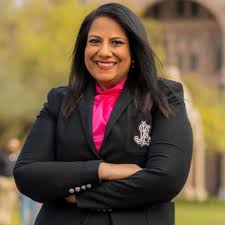
Austin, Texas: Pooja Sethi claimed a commanding victory in the Democratic primary for Texas House District 47, securing 76 percent of the vote against Army veteran Joseph Kopser’s 24 percent and positioning herself for a November showdown with Republican nominee Jennifer Mushtaler. Her win, celebrated by supporters in downtown Austin, was more than a routine primary triumph; it became a defining moment in a campaign shaped by resilience, identity, and an increasingly diverse electorate.
Sethi, an attorney and former chief of staff to Vikki Goodwin, entered the race emphasizing civil rights, public safety, and community advocacy. Earlier in her career, she worked as an immigration attorney with Catholic Charities, representing families navigating the complexities of the legal system. Throughout the campaign, she leaned heavily on grassroots tactics — block walking, direct voter outreach, and sustained conversations across neighborhoods — methods she credits for her decisive margin of victory.
The race drew national attention after Sethi forcefully responded to racist remarks targeting her Indian heritage. Rather than allowing the controversy to derail her bid, she framed it as evidence of why representation and inclusion matter in Texas politics. For many supporters, her victory symbolized a rejection of exclusionary rhetoric and an affirmation that immigrant stories remain central to the American narrative. If elected in November, Sethi would become the first Asian Democratic woman, the first Indian, and the first Hindu to serve in the Texas Legislature.
Policy remains at the heart of her platform. Sethi has pledged to reintroduce legislation raising the minimum age to purchase certain semiautomatic rifles from 18 to 21, a proposal shaped in part by the lingering trauma of the Uvalde school shooting. She argues that “being silent is not an option,” positioning gun safety and protections for families as urgent priorities.
In California, the outcomes were similarly varied. Incumbent Representative Ami Bera comfortably advanced in his reelection campaign, continuing his tenure as one of the longest-serving Indian Americans in the U.S. Congress. Known for his consistent work on foreign policy and healthcare issues, Bera has remained a prominent and steady presence in Sacramento-area politics.
At the same time, several younger Indian American candidates contesting local and state assembly races in the Silicon Valley region experienced mixed results. While some successfully secured spots in the general election, others were edged out in California’s highly competitive “top-two” primary system, where crowded fields often make advancement difficult.
The primary results reveal a community no longer confined to a single narrative or ideology. From pragmatic incumbents to first-time challengers, Indian American candidates are refining their voices and expanding their reach. As attention turns to November, Sethi’s ascent stands as both a personal milestone and a sign that South Asian representation is becoming a permanent feature of American public life.