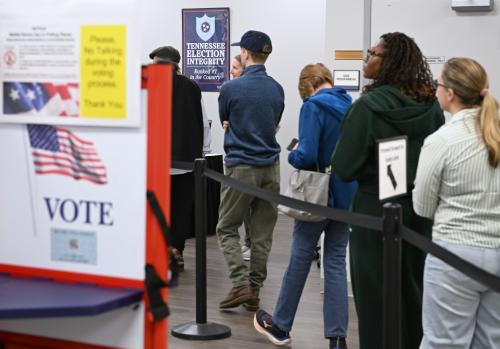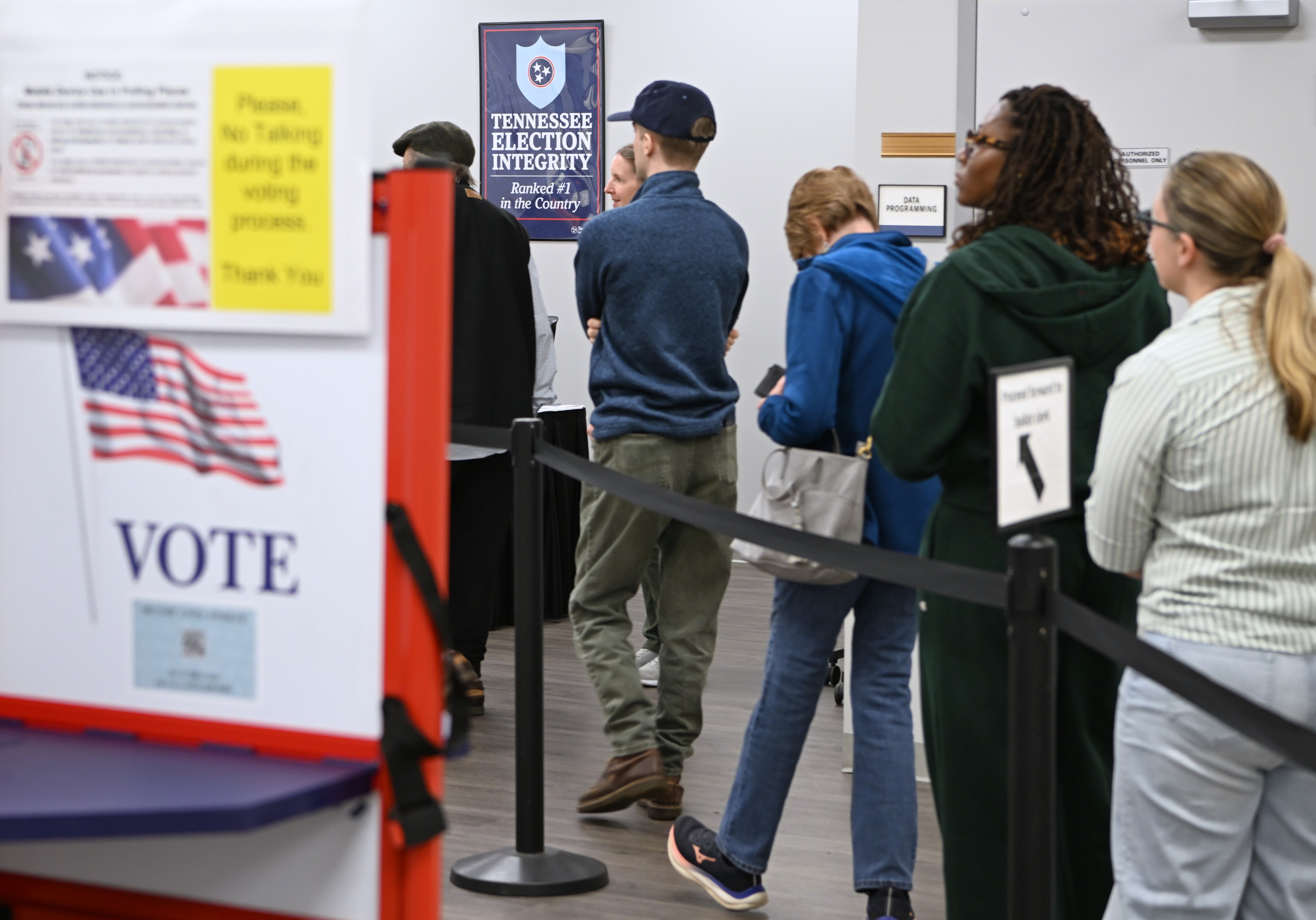
WASHINGTON, (IANS): A sweeping Democratic "blue wave" has transformed the American political landscape in Tuesday’s midterm elections, handing the party full control of both chambers of Congress and delivering historic defeats to President Donald Trump’s Republicans. The legislative realignment establishes a divided government for the final two years of Trump’s presidency, breaking decades-long streaks in traditionally deep-red strongholds and setting up an era of intense executive scrutiny in the nation's capital.
By early Wednesday morning, on November 4, major networks including CBS News and Fox News projected that Democrats had successfully crossed the 218-seat threshold required for a House majority and recaptured the Senate by securing at least 54 seats. This dramatic shift completely overturns the 53–47 Republican majority that existed before the election. When the newly elected Congress officially convenes in January 2027, House Democratic Leader Hakeem Jeffries is positioned to become the first Black Speaker of the House in U.S. history, subject to a formal chamber vote. Jeffries declared the outcome a "change election," promising that the new majority will leverage its committee gavels, investigative authority, and control over legislative scheduling to demand executive accountability and tackle soaring household costs.
The sheer scale of the Democratic victories caught veteran political analysts off guard, as competitive districts collapsed and long-standing Republican territories flipped across the American Midwest, South, and beyond. The most stunning upsets occurred in Texas, a state that had not elected a Democrat to the U.S. Senate since 1988, where Democrat James Talarico unseated Republican Ken Paxton. In another major Texas blow, Democrat Gina Hinojosa defeated three-term incumbent Republican Governor Greg Abbott, ending more than three decades of Republican dominance in the state’s gubernatorial mansion. Meanwhile, Kansas broke a near-century-long streak as Democrat Adam Hamilton defeated Republican Senator Roger Marshall, securing the party's first Senate victory in Kansas since 1932.
Ohio delivered a devastating double defeat to the Republican leadership, where former Democratic Senator Sherrod Brown reclaimed the Senate seat previously vacated by Vice President J.D. Vance, defeating Republican Jon Husted. In the Ohio gubernatorial race, Democrat Amy Acton defeated Republican Vivek Ramaswamy to become the first woman elected Governor of Ohio, overcoming intense campaign backing from both Trump and Vance. In Iowa, Democrat Josh Turek unseated Republican Ashley Hinson for the Senate, while Rob Sand captured the state's governorship. Further compounding Republican losses, Maine Democrat Troy Jackson unseated veteran Republican Senator Susan Collins, North Carolina elected former Democratic Governor Roy Cooper to the Senate, and South Carolina Democrat Annie Andrews pulled off a major upset by defeating incumbent Republican Senator Darline Graham. History was also made in Georgia, where former Atlanta Mayor Keisha Lance Bottoms became the first Black woman elected Governor in U.S. history, and in Michigan, where Abdul El-Sayed won his race to become the first Muslim elected to the U.S. Senate.
The unexpected loss of both legislative chambers has triggered immediate soul-searching and internal friction within the Republican apparatus. President Donald Trump took a dual approach in his post-election reactions, offering congratulations to the winning Democrats in a telephone interview with CBS News and stating that he looks forward to working together for the good of the country. However, Trump largely attributed the losses to his own absence from the ballot, arguing that Republican voters stayed home because he was not running, while reminding the incoming opposition that he still retains absolute presidential veto powers.
Vice President J.D. Vance offered a far more direct, data-driven assessment on social media, disagreeing with the idea that low turnout was the primary culprit. Vance revealed that internal data showed GOP voters did turn out, but many who voted for the Trump-Vance ticket in 2024 ultimately crossed party lines to vote for Democrats in 2026. According to Vance, a respected internal pollster had warned him before Tuesday that Republicans could lose the national generic congressional ballot by as much as 13 percentage points. When disaffected voters were asked what it would take to win back their support, the top responses focused on ending the war, addressing inflation, re-emphasizing "America First" principles, and changing Washington's relationship with Israel. Ultimately, Vance pointed to the ongoing military conflict as the core reason for the defeat, noting that losing six-year Senate seats was a massive political price for the party to absorb. President Trump echoed this sentiment in interviews with Fox News and The Wall Street Journal, naming the conflict with Iran as a defining factor in the election outcome, though he maintained that he did not regret the military campaign.
As the Republican party braces for contentious leadership elections, internal divisions are spilling over into public view. Outgoing House Speaker Mike Johnson defended his party's performance by pointing out that the President's party historically struggles during midterm cycles, and he cautioned the incoming Democrats against turning their promised oversight into partisan retaliation. However, conservative backbenchers, including Representative Ralph Norman, have called the heavy losses a definitive wake-up call, putting Johnson's continued leadership under intense scrutiny.
On the other side of the aisle, Senate Democratic Leader Chuck Schumer celebrated the historic breakthrough, stating that against all odds, Democrats had won the Senate and relief is on the way. Schumer attributed the gains to voters' deep concerns over rising household expenses, healthcare costs, and the overall direction of the country. Democratic National Committee Chairman Ken Martin framed the sweeping victories as a clear mandate from the American public. Martin emphasized that the public expects the new majority to immediately address household expenses, protect healthcare, re-evaluate national immigration strategies, and heavily scrutinize administration policies—specifically aggressive trade tariffs and the ongoing war. With the executive branch remaining firmly in Trump's hands and the legislative branch transitioning to solid Democratic control, the stage is set for a deeply divided, highly confrontational government when the new Congress convenes.